
Fireplace dampers in Greenwich, CT
Fireplace Dampers
Throat and top-sealing dampers control how much heated air escapes up your flue, and a damper that won't seal wastes energy every day it's left that way.
- CSIA-Trained Technicians
- 10+ Years in Fairfield County
- 100% Satisfaction Guarantee
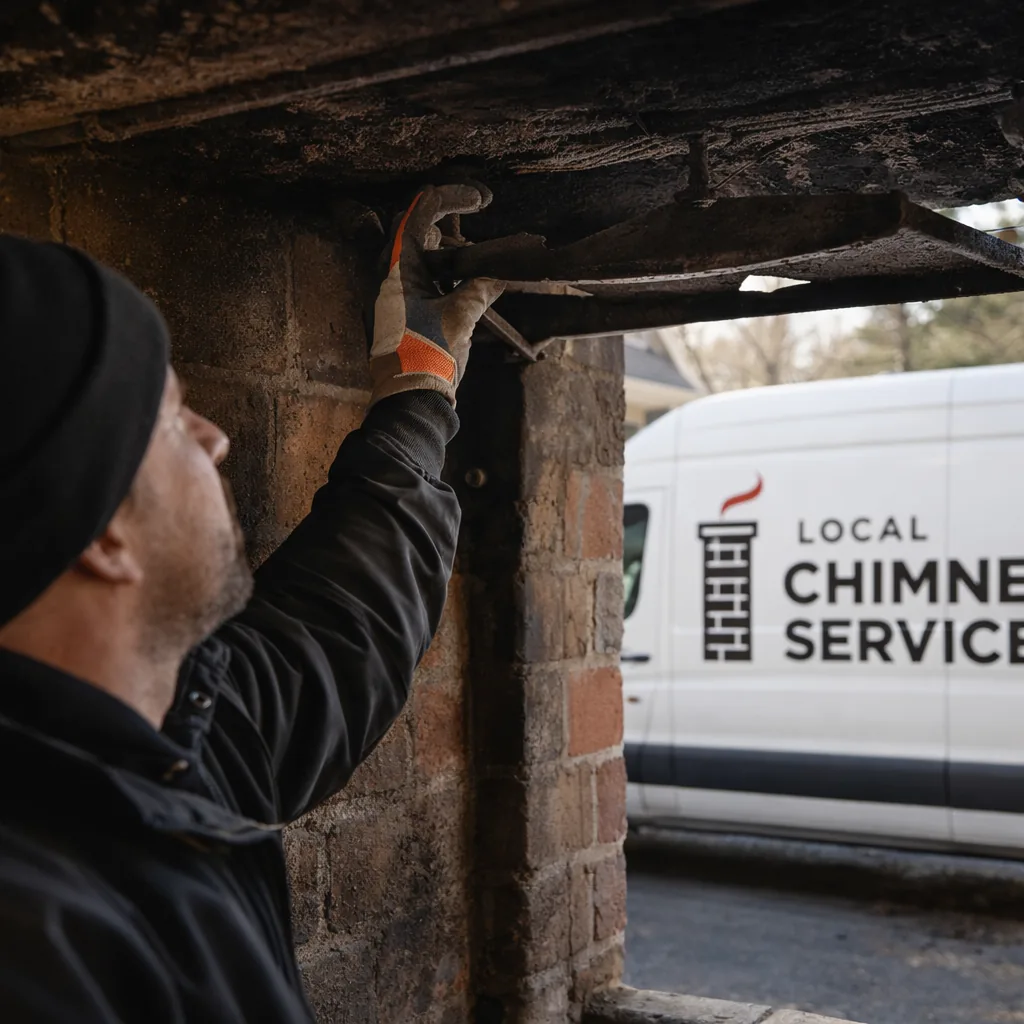
Two damper types, one job to do
Throat Dampers, Top-Sealing Dampers, and What Goes Wrong
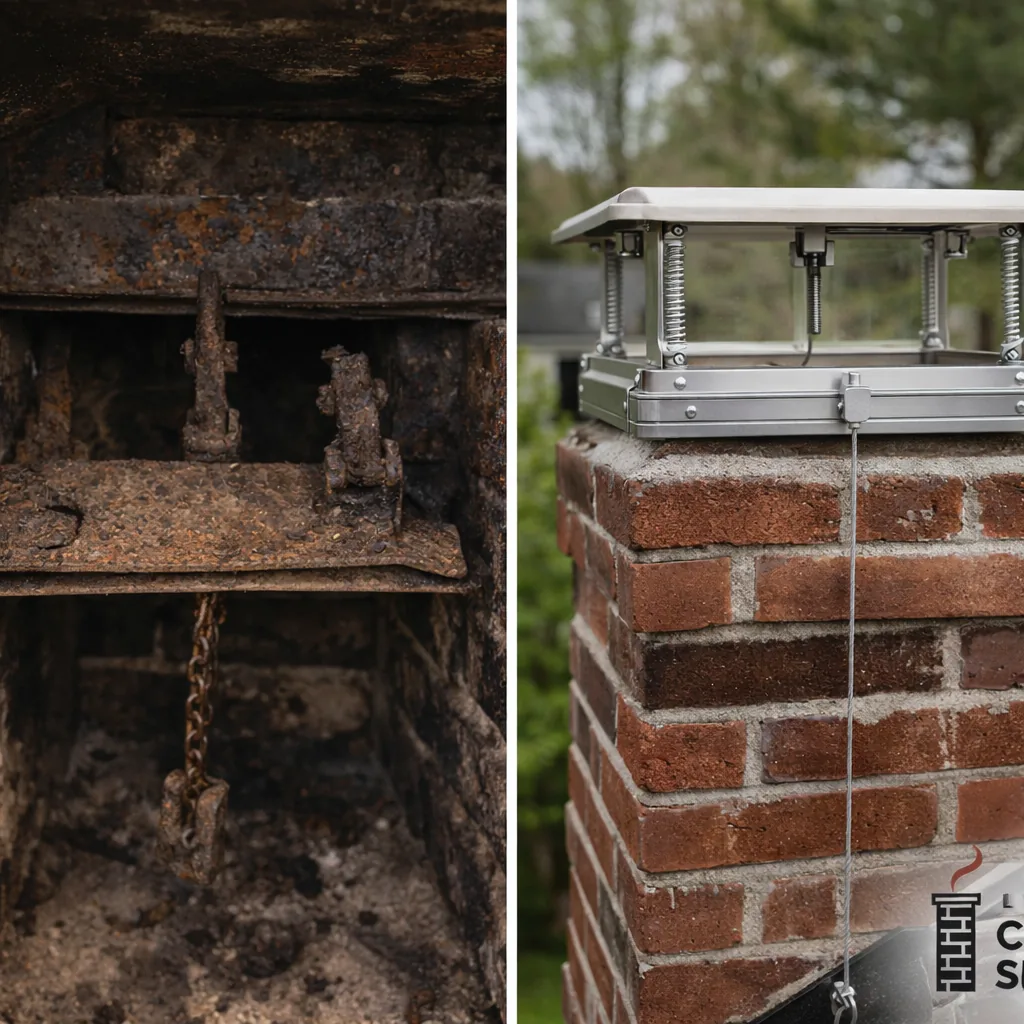
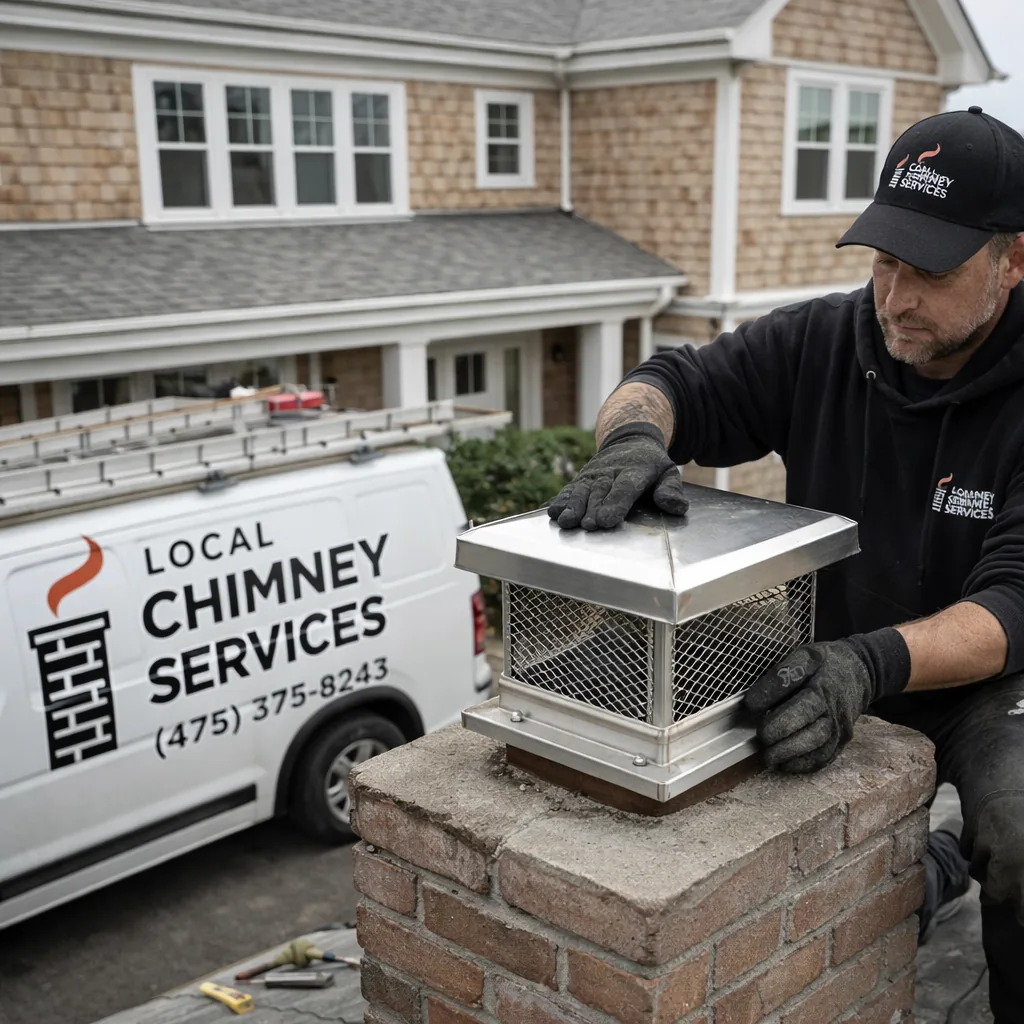
A throat damper is a cast iron plate that sits just above the firebox opening and swings or slides open on a lever or handle, the traditional style found in most older Greenwich masonry fireplaces. A top-sealing damper works differently: a rubber-gasketed plate mounted at the top of the flue closes flush against the chimney crown and opens on a cable pull from inside the firebox, sealing tighter than a throat damper and doubling as a rain cap when it's shut.
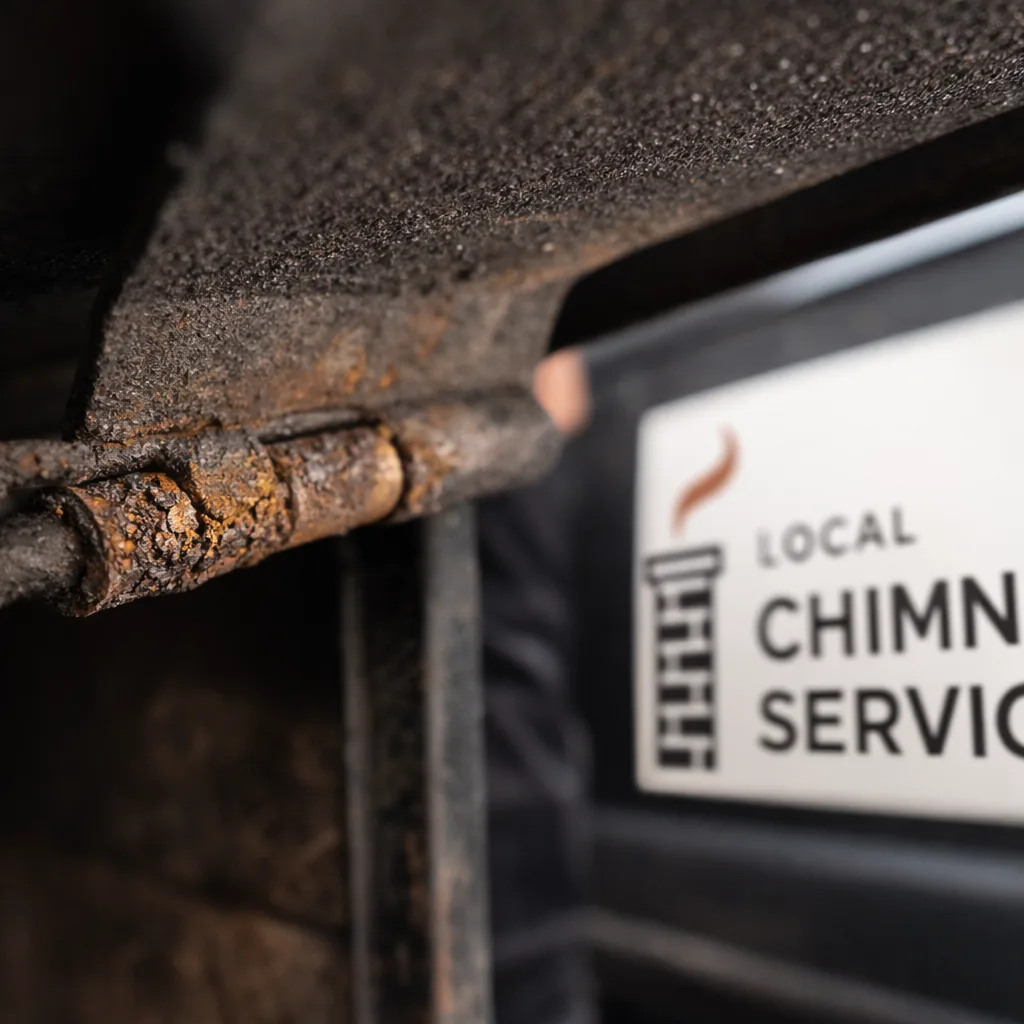
Condensation, soot, and years of heat cycling take a toll on either type. A cast iron throat damper can rust at the hinge until it sticks open, sticks closed, or grinds when it moves at all. Repeated heat exposure can also warp the plate itself just enough that it never sits flat against its seat, so air keeps moving through the flue even when the handle says the damper is closed.
A fireplace flue that won't seal behaves like a chimney-shaped hole in the roof, pulling heated air out in winter and cooled air out in summer whenever the fireplace sits unused. In cold, damp New England winters, that adds up to a meaningful and constant loss, day after day, whether or not you're burning a fire that week.
A damper that's merely stuck from disuse can sometimes be freed, cleaned, and lubricated back into working order, especially if the frame and hinge are still sound. Rust-through, a warped throat plate, or a masonry damper frame with cracked mortar around it usually calls for replacement instead, and a full chimney inspection is the right first step to tell which situation you're in. If the surrounding firebox or smoke chamber masonry needs attention at the same time, that falls under chimney repair rather than the damper hardware itself. Gas fireplaces use their own venting and shutoff hardware instead of a traditional damper, and issues there are a separate matter we handle under gas fireplace repair.
Hardware, wear and the fix
Damper Types and Common Problems
-
Throat Dampers
A cast iron plate sits just above the firebox opening and swings or slides open on a lever or handle, the traditional damper style found in most older Greenwich masonry fireplaces.
-
Top-Sealing Dampers
A rubber-gasketed plate mounted at the top of the flue closes flush against the chimney crown and opens on a cable pull, sealing tighter than a throat damper and doubling as a rain cap.
-
Rust and Corrosion
Condensation and years of heat cycling can rust a cast iron throat damper's hinge or plate, leaving it stuck open, stuck closed, or unable to seat flush either way.
-
Warped Plates
Repeated heat exposure can warp a damper plate just enough that it never sits flat against its seat, so air keeps moving through the flue even when the handle says closed.
-
Energy Loss From a Damper That Won't Seal
An open flue behaves like a chimney-shaped hole in the roof, pulling heated air out in winter and cooled air out in summer whenever the fireplace sits unused.
-
Repair or Full Replacement
A stuck damper can sometimes be freed and lubricated back into service, while a rusted-through plate or a cracked masonry frame usually means installing a new one.
-
10+ Years
Sweeping and repairing Fairfield County chimneys
-
100%
Satisfaction guarantee on workmanship
-
7 Days
A week, with extended hours through heating season
-
CSIA
Trained chimney technicians
From stuck handle to confirmed seal
How a Damper Repair Visit Works
Five stages, from describing the symptom through the photo report you keep at the end.
-
01
Tell Us What's Happening
A damper that won't budge, won't close all the way, or rattles when it's operated all point to different underlying problems, so start with what you're noticing.
-
02
On-Site Damper Inspection
A technician checks the plate, hinge, and seal in person, and looks at the surrounding masonry frame for cracks or deterioration while they're up there.
-
03
Repair, Free, or Replace
Depending on what's found, the fix might be cleaning and lubricating a stuck hinge, or it might mean installing a new throat or top-sealing damper.
-
04
Confirm the Seal
Once the work is done, the damper gets tested closed to confirm it actually stops the draft, since a handle that moves freely doesn't guarantee a full seal.
-
05
Photo Report
You get photos of the finished damper and a written summary of what was found and fixed, backed by our parts-and-labor warranty.
Dampers freed and replaced across Fairfield County
Recent Damper Work
Repair versus replace, and what it saves
Questions homeowners ask about dampers
How do I know if my damper needs to be repaired or replaced?
Can a damper be too old to fix?
Is a top-sealing damper better than a throat damper?
Will a broken damper affect my heating bill?
Can I replace a damper myself?
Do gas fireplaces have the same kind of damper?
Booking damper visits now
Damper Stuck, Rusted, or Won't Seal?
Tell us what it's doing and we'll check the plate, hinge, and frame in person before recommending a repair or a replacement.
Serving Greenwich
Local Chimney Services provides fast, same-day garage door repair, installation, and service across Greenwich and the surrounding Orange County communities. Licensed, bonded, and insured, with technicians who call ahead.