
Chimney repointing in Greenwich, CT
Repointing Chimney
Grinding out failed mortar joints and repointing with matched mortar stops water from working deeper into the chimney's structure, work that coastal freeze-thaw cycles make routine here.
- CSIA-Trained Technicians
- 10+ Years in Fairfield County
- 100% Satisfaction Guarantee
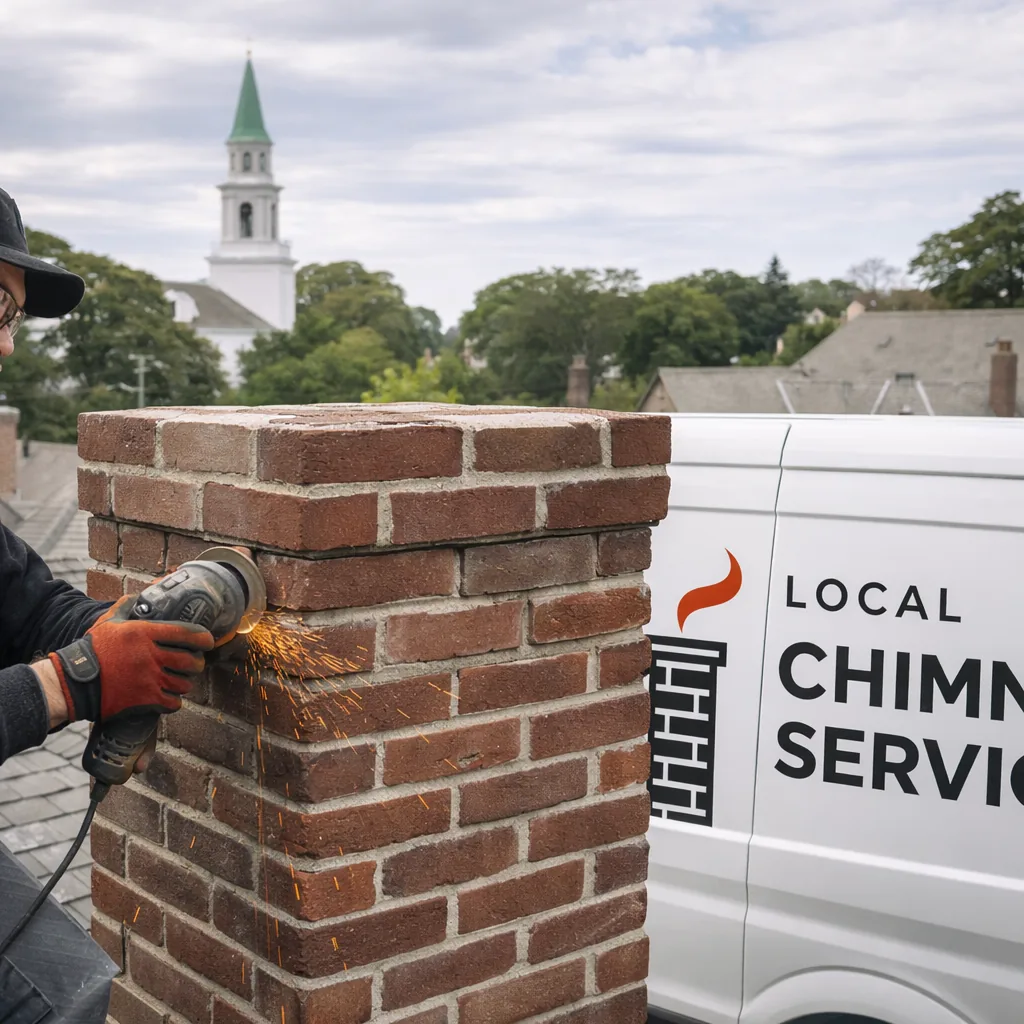
Ground out, repacked, matched
Repointing a Chimney's Mortar Joints
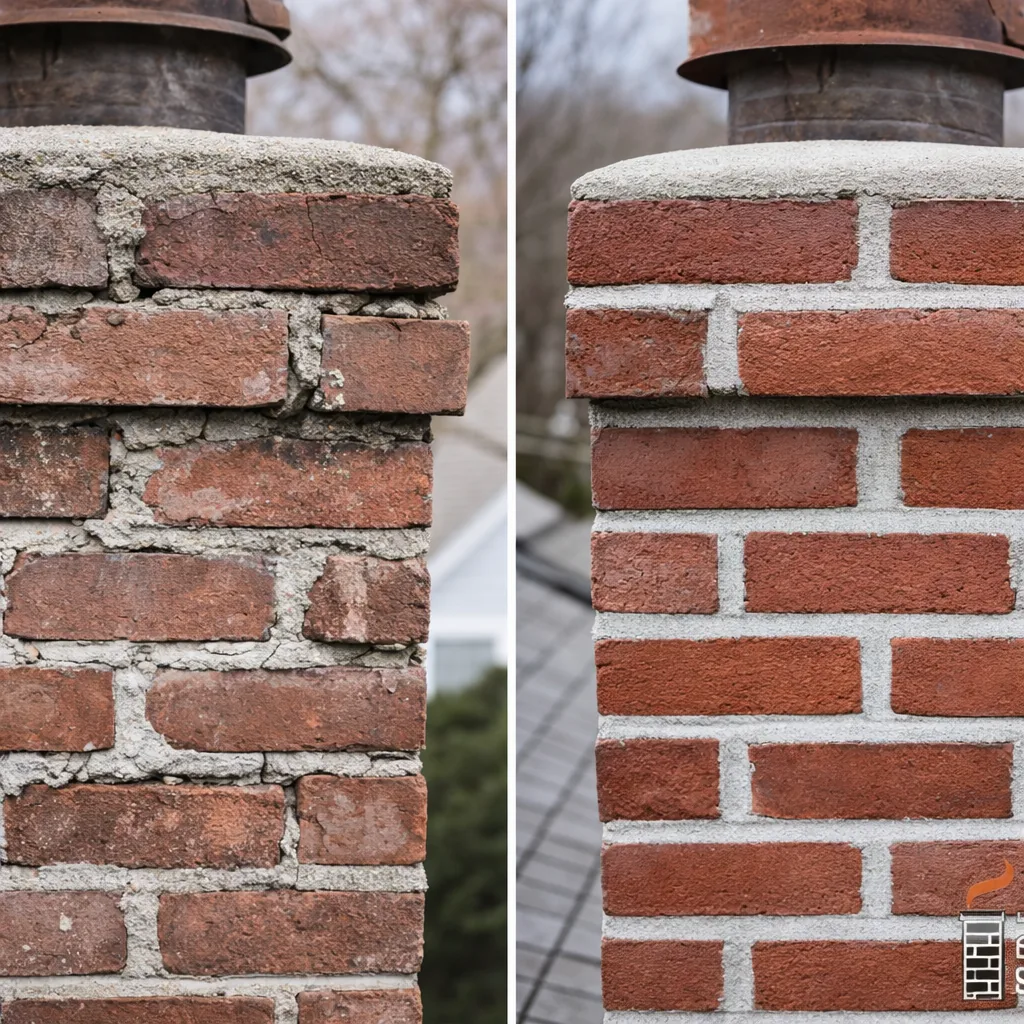
Repointing means grinding out deteriorated mortar to a consistent depth along every affected joint, then repacking those joints with fresh mortar matched to the original in composition and, as closely as possible, in color. It is not the same as simply troweling a new layer over old, failing mortar, which looks fine for a season or two and then fails again because it never bonded properly to sound material underneath.
Lower Fairfield County's coastal position drives a lot of this work. Water that gets into a cracked or open joint freezes during a cold snap, expands, and pushes the joint open further, and that freeze-thaw cycle repeats through the winter every time temperatures swing back above and below freezing. Being close to Long Island Sound adds salt-laden air into the mix, which accelerates mortar breakdown compared to a chimney further inland, so Greenwich and the surrounding shoreline towns tend to see repointing come up sooner than it might elsewhere in Connecticut. If you're not sure whether your own joints have reached that point, chimney service in Greenwich includes a visual check as part of a routine visit.
Once water is getting behind the brick face through failed joints, the brick itself can start to spall, the surface flaking or popping off in chips, sometimes losing an entire face. Spalled brick needs to be identified and addressed individually, either replaced or, if the damage is limited, left in place once the surrounding joints are repointed and water is no longer working its way behind it.
Left alone, deteriorating mortar joints let water keep working into the chimney's structure, which shows up eventually as interior leaks, staining, or a chimney that's visibly leaning away from the house. Catching it at the repointing stage, rather than after the structure has shifted, is generally the more affordable path, and it's something we often flag during a full chimney inspection before it becomes obvious from the ground. When deterioration has gone further, into the flue liner or the structure itself, that moves into broader chimney repair rather than repointing alone.
Joint by joint, matched to the original
What Repointing Involves
-
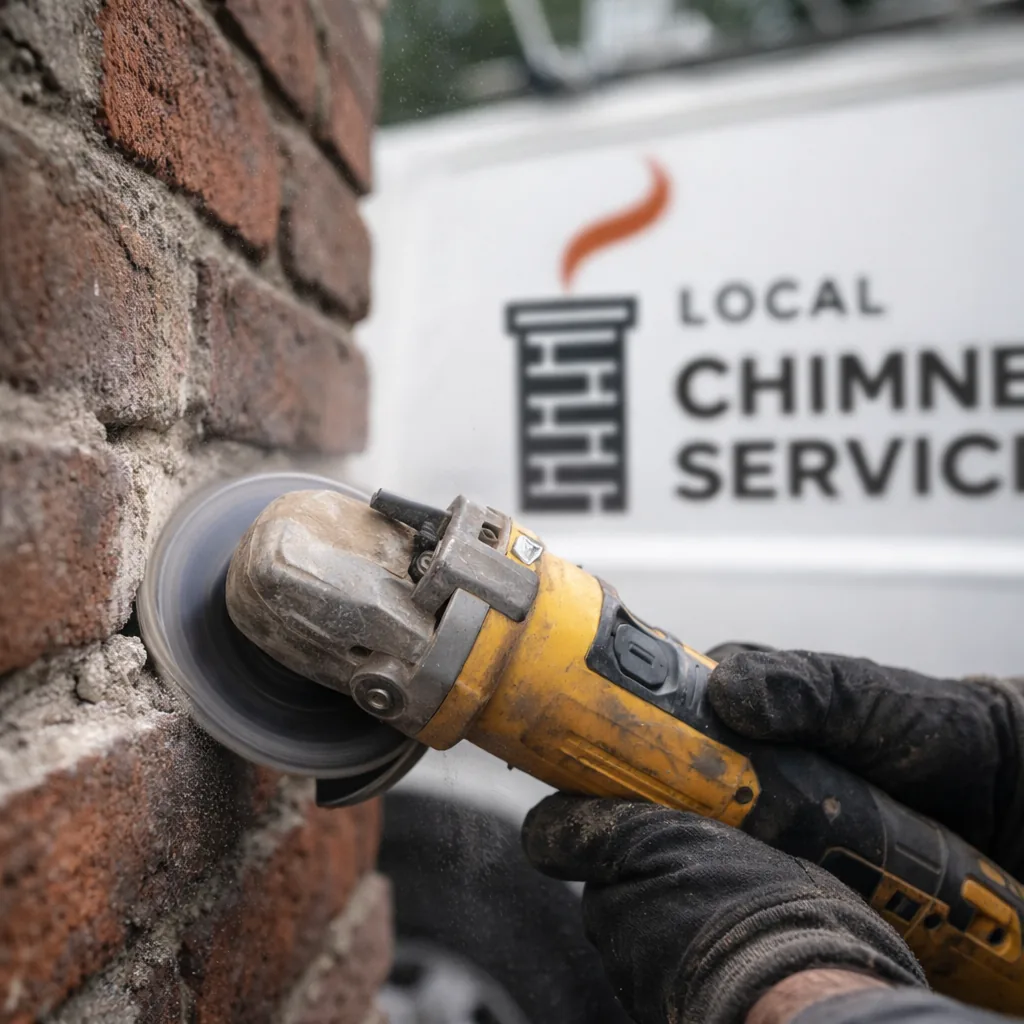
Mortar Joint Grinding
Deteriorated joints get ground out to a consistent depth rather than just scraped at the surface, giving the new mortar something solid to bond to.
-
Matched Mortar Repointing
Fresh mortar matched in composition and color to your chimney's original masonry gets packed into the ground-out joints.
-
Spalled Brick Replacement
Brick faces that have flaked or popped off from water damage get replaced individually, matched to the surrounding brick.
-
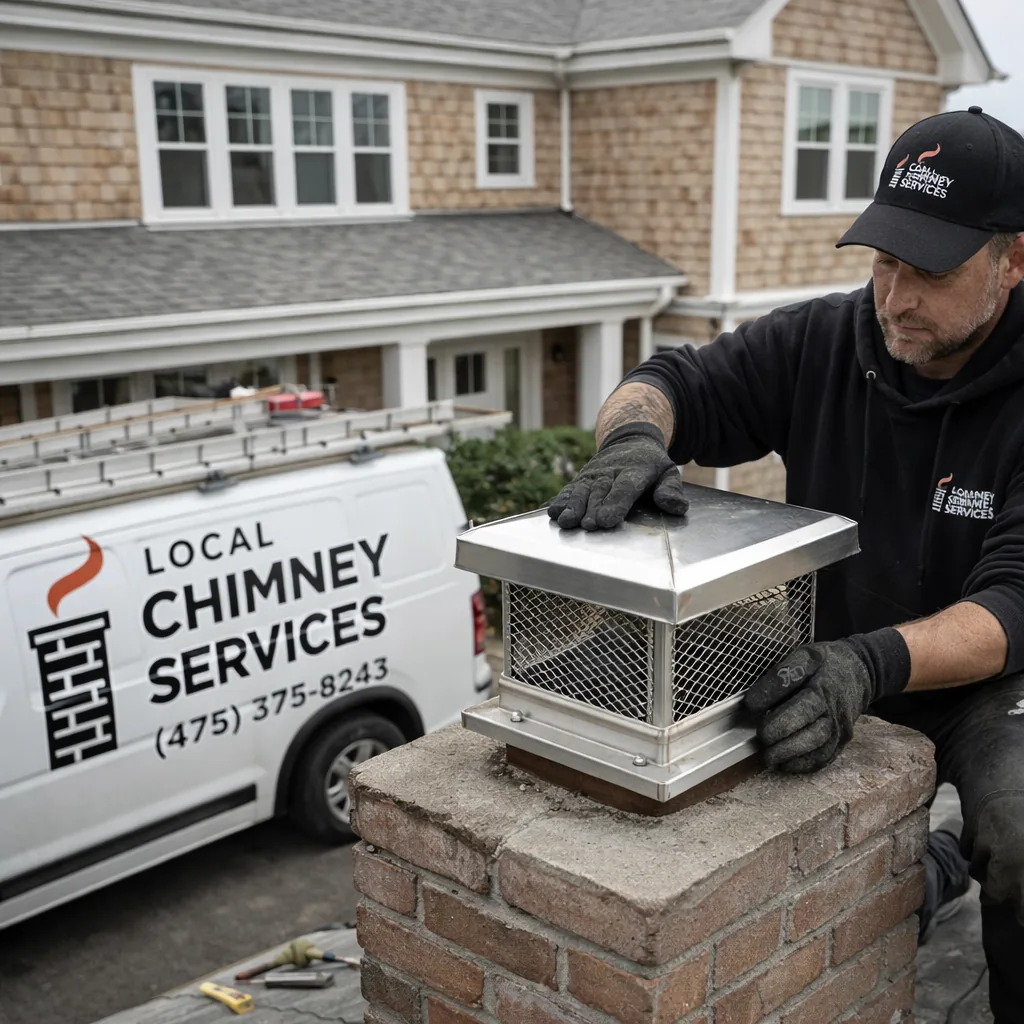
Crown and Cap Check
A chimney crown or cap in poor condition lets water into the very joints we just repointed, so we check both while we're up there.
-
Coastal Weathering Assessment
Chimneys closer to the shoreline see faster mortar breakdown from salt air and freeze-thaw cycling, and we factor that into how we assess a given chimney's condition.
-
Full Photo Documentation
Before and after photos of the repointed joints give you a clear record of exactly what was done and where.
-
10+ Years
Sweeping and repairing Fairfield County chimneys
-
100%
Satisfaction guarantee on workmanship
-
7 Days
A week, with extended hours through heating season
-
CSIA
Trained chimney technicians
From first look to finished joints
How a Repointing Job Works
Five stages, from the first call through the photo-documented report you keep at the end.
-
01
Describe What You're Seeing
Crumbling mortar, gaps between bricks, or white staining on the chimney's exterior are all useful starting points for scheduling a visit.
-
02
On-Site Masonry Evaluation
A technician examines the joints, brick condition, and crown up close, checking how far the deterioration has spread.
-
03
Written Scope Before Work Starts
You get a clear plan covering which joints need grinding and repointing and whether any brick needs replacing, before work begins.
-
04
Grinding and Repointing
Affected joints are ground out to a consistent depth and repacked with matched mortar, section by section.
-
05
Photo Report and Warranty
The finished masonry work is photographed and backed by a written parts-and-labor warranty.
Joints restored across the shoreline
Recent Repointing Work
Signs, scope and how long it lasts
Questions homeowners ask about repointing
What is the average cost to repair a chimney?
How do I know if my chimney needs repointing?
Is chimney repair covered by homeowners insurance?
Can a handyman repoint a chimney?
How long does repointing last?
What happens if repointing is put off too long?
In-person masonry evaluation
Seeing Gaps or Crumbling Mortar?
Send us a few photos or describe what you're noticing and we'll schedule an in-person look at the masonry before recommending any work.
Serving Greenwich
Local Chimney Services provides fast, same-day garage door repair, installation, and service across Greenwich and the surrounding Orange County communities. Licensed, bonded, and insured, with technicians who call ahead.